
Jagannath Temple Darshan Timings 2026: Complete Guide for Every Devotee
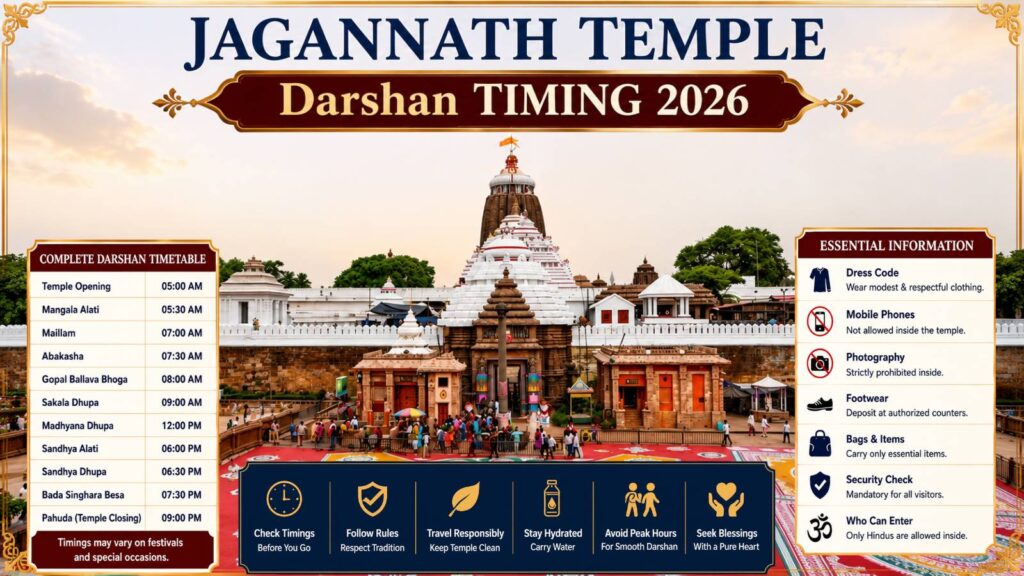
The Jagannath Temple is not only one of the Char Dham pilgrimage sites but also a living centre of centuries-old traditions, sacred rituals, and unwavering devotion. From the peaceful Mangala Alati at dawn to the magnificent Bada Singhara Besa at night, every ritual reflects the temple’s rich spiritual heritage.
Every day, thousands of devotees from across India and around the world visit the sacred Jagannath Temple in Puri to seek the blessings of Lord Jagannath, Lord Balabhadra, and Devi Subhadra. Whether you are planning your first pilgrimage or returning for another divine experience, understanding the temple’s darshan timings and daily rituals can help you make the most of your visit. In this guide, you’ll find the latest Jagannath Temple darshan timings, daily ritual schedule, entry guidelines, the best time to visit, travel tips, nearby attractions, and answers to the most frequently asked questions. If you are travelling with your family, elderly pilgrims, or visiting during a major festival like Rath Yatra, this guide will help you plan a smooth and memorable darshan.
Why Knowing the Darshan Timings Matters
Planning your visit around the Jagannath Temple’s daily schedule can significantly improve your overall pilgrimage experience. Since the temple follows a strict sequence of rituals from early morning until late at night, darshan availability may vary throughout the day.
The right knowledge of darshan timings helps you:
- Experience important rituals like Mangala Alati and Sandhya Alati.
- Avoid peak crowd hours and long waiting times.
- Plan your journey according to temple opening and closing hours.
- Enjoy a more peaceful and spiritually enriching darshan.
- Coordinate your visit with elderly family members and children more comfortably.
During weekends, Ekadashi, public holidays, and major festivals such as Rath Yatra, Snana Purnima, and Kartik Purnima, the number of devotees increases considerably. Checking the temple schedule before your visit can help you avoid inconvenience and make your pilgrimage more organized.
Jagannath Temple Daily Opening and Closing Timings
The Jagannath Temple generally opens before sunrise and remains active throughout the day with a series of sacred rituals and bhoga offerings. While the temple remains open for devotees during most hours, access may occasionally pause while specific rituals are performed.
Complete Jagannath Temple Darshan Timetable
The following table provides a general overview of the temple’s daily schedule. Timings are approximate and may vary depending on the day’s rituals and festival calendar.
| Ritual / Event | Approximate Time | Description |
|---|---|---|
| Temple Opening | 5:00 AM | The temple doors open for the day’s rituals. |
| Mangala Alati | 5:00 AM – 5:30 AM | The first auspicious offering of lamps to the deities. |
| Mailam | 6:00 AM | Changing of the deities’ clothes and ornaments. |
| Abakasha | 6:00 AM – 6:30 AM | Ritual cleansing and morning preparations. |
| Gopal Ballava Bhoga | 8:30 AM | First food offering of the day. |
| Sakala Dhupa | 9:00 AM – 10:00 AM | Main morning meal offered to the deities. |
| Madhyana Dhupa | 12:00 PM – 1:00 PM | Midday food offering and worship. |
| Sandhya Alati | 5:30 PM – 6:00 PM | Evening lamp ceremony accompanied by devotional chants. |
| Sandhya Dhupa | 6:30 PM – 8:00 PM | Evening bhoga offering. |
| Bada Singhara Besa | 9:00 PM – 10:30 PM | The deities are adorned with flowers and special attire. |
| Pahuda | 11:30 PM – 12:30 AM | Final ritual marking the Lords’ rest for the night. |
Best Time for a Peaceful Darshan

- Early Morning : Early mornings are considered one of the best times for darshan. The atmosphere is calm, the weather is pleasant, and devotees can witness the sacred Mangala Alati and the beginning of the temple’s daily rituals.
- Afternoon : The afternoon generally sees a moderate number of visitors. Depending on the ritual schedule, this period may offer a relatively relaxed darshan experience, though certain rituals can temporarily limit public access.
- Evening : Evenings are especially beautiful as the temple comes alive with devotional hymns and the Sandhya Alati. The illuminated temple and the spiritually charged atmosphere make this a memorable time to visit.
- Festival Days : Major festivals such as Rath Yatra, Snana Purnima, Dol Yatra, and Kartik Purnima attract lakhs of devotees. While the celebrations are extraordinary, visitors should be prepared for larger crowds, longer waiting times, and additional security arrangements.
- Weekdays vs Weekends : Weekdays usually offer a smoother darshan experience compared to weekends and public holidays. Those seeking a quieter visit may prefer planning their pilgrimage between Monday and Thursday, excluding festival periods.
Jagannath Temple Entry Rules for Visitors
The Jagannath Temple is one of India’s holiest pilgrimage sites, and every visitor is expected to follow its traditional customs and security guidelines. Knowing these rules before your visit will help ensure a peaceful and hassle-free darshan.
Who Can Enter the Jagannath Temple?
As per the temple’s traditional customs, only Hindus are permitted to enter the main temple premises. Visitors who are not allowed inside can view the magnificent temple from the nearby Raghunandan Library viewing platform.
Dress Code : Devotees are encouraged to wear clean, modest, and respectful clothing while visiting the temple. Traditional Indian attire such as sarees, salwar kameez, kurtas, or dhotis is preferred, although decent Western clothing is generally acceptable.
Mobile Phone Restrictions : Mobile phones are strictly prohibited inside the temple complex. Visitors should deposit their phones at authorised locker facilities before entering to avoid inconvenience during security checks.
Camera Restrictions : Photography and videography are not allowed inside the Jagannath Temple. This rule helps preserve the temple’s sacred atmosphere and allows devotees to worship without distractions.
Bags and Prohibited Items : Large bags, backpacks, cameras, electronic gadgets, sharp objects, and other restricted items are not permitted inside the temple. Carrying only essential belongings will make your entry quicker and more convenient.
Security Checks : Every visitor must pass through security screening before entering the temple. During festivals and weekends, additional security measures and longer queues should be expected for the safety of all devotees.
Follow Temple Etiquette : Maintain silence, respect temple traditions, and follow the instructions of the temple staff throughout your visit. A respectful attitude not only enhances your own spiritual experience but also helps maintain the sanctity of this sacred shrine.
Best Months to Visit Jagannath Temple
The Jagannath Temple welcomes devotees throughout the year, but each season offers a unique spiritual experience. Whether you prefer pleasant weather, fewer crowds, or grand festivals, choosing the right time can make your pilgrimage even more memorable.
Winter (October to February) – Best Time for a Comfortable Visit
Winter is considered the ideal season to visit Jagannath Temple. The weather remains cool and pleasant, making it comfortable to explore the temple, attend rituals, and visit nearby attractions without the discomfort of excessive heat.
Summer (March to June) – Perfect for Early Morning Darshan
Summer temperatures in Puri can be quite high, especially during the afternoon. If you plan your visit during this season, opt for an early morning or evening darshan to enjoy a more peaceful experience and avoid the midday heat.
Monsoon (July to September) – A Refreshing Spiritual Experience
The monsoon brings lush greenery and a serene atmosphere to Puri, making the temple surroundings even more beautiful. While occasional rain showers may affect sightseeing plans, the spiritual charm of the temple remains unchanged.
Rath Yatra Season – Witness the World’s Grandest Chariot Festival

The Rath Yatra season is the most spectacular time to visit Puri, as millions of devotees gather to witness Lord Jagannath, Lord Balabhadra, and Devi Subhadra on their majestic chariots. Although the crowds are enormous, the festive atmosphere and spiritual energy make it a once-in-a-lifetime experience for every devotee.
How to Reach Jagannath Temple Before Morning Darshan
Reaching the Jagannath Temple before the early morning rituals allows you to enjoy a peaceful atmosphere and shorter queues. Puri is well connected by rail, road, and air, making it convenient for pilgrims from across India.
- By Railway Station : Puri Railway Station is the nearest railway station, located about 3 km from the Jagannath Temple. Auto-rickshaws, cycle rickshaws, taxis, and app-based cabs are readily available outside the station, and the journey usually takes 10–15 minutes, depending on traffic.
- By Bus Stand : The Puri Bus Stand (Malatipatpur/New Bus Stand) is well connected to major cities in Odisha and neighbouring states. From the bus stand, you can easily hire an auto-rickshaw or taxi to reach the temple in approximately 10–20 minutes.
- By Airport : The nearest airport is Biju Patnaik International Airport, Bhubaneswar, located around 60 km from Puri. From the airport, you can travel by taxi, private cab, or bus, and the journey to Jagannath Temple usually takes 1.5 to 2 hours, depending on road conditions.
- Local Transport : Puri offers plenty of local transport options, including auto-rickshaws, cycle rickshaws, taxis, e-rickshaws, and app-based cabs. If you’re staying near the temple, walking in the early morning is also a pleasant way to reach the shrine while experiencing the city’s peaceful spiritual atmosphere.
Nearby Attractions After Darshan
After receiving the blessings of Lord Jagannath, make the most of your visit by exploring the many spiritual, cultural, and scenic attractions around Puri. From ancient temples and sacred water bodies to heritage villages and beautiful beaches, these destinations add even more meaning to your pilgrimage.
1. Gundicha Temple

Located about 3 km from the Jagannath Temple, Gundicha Temple is famously known as the destination of the annual Rath Yatra. During the festival, Lord Jagannath, Lord Balabhadra, and Devi Subhadra stay here for nine days, making it one of Puri’s most sacred temples.
2. Narendra Tank (Narendra Pokhari)

Narendra Tank is one of the largest and oldest holy tanks in Puri, known for its peaceful surroundings and religious significance. It is especially famous for the Chandan Yatra, where beautifully decorated boats carrying the deities are floated across the water.
3. Swargadwar Beach

Just a short drive from the temple, Swargadwar Beach is a popular place to relax after darshan. Devotees visit the beach to enjoy the sea breeze, witness beautiful sunrise or sunset views, and experience the spiritual charm of Puri’s coastline.
4. Lokanath Temple

Dedicated to Lord Shiva, the Lokanath Temple is one of the most revered temples in Puri and is believed to protect the sacred Jagannath Dham. Many pilgrims visit this temple after their Jagannath darshan to seek the blessings of Lord Lokanath.
5. Blue Flag Beach

Puri’s Blue Flag Beach is known for its clean environment, golden sands, and excellent visitor facilities. It is an ideal place to unwind with family while enjoying the scenic beauty of the Bay of Bengal after your temple visit.
6. Raghurajpur Heritage Village

Located about 15 km from Puri, Raghurajpur Heritage Village is a living museum of Odisha’s traditional arts and crafts. Visitors can watch skilled artisans create Pattachitra paintings, palm-leaf engravings, wooden toys, and stone carvings, making it a must-visit destination for art and culture lovers.
Travel Tips for First-Time Visitors
- Footwear Arrangements : Footwear is not allowed inside the temple premises. Use the authorised shoe deposit counters near the temple entrances to safely store your footwear before joining the darshan queue.
- Drinking Water : Carry a reusable water bottle for your journey, especially during warmer months. Drink enough water before entering the temple, as access to refreshments may be limited while you’re inside the temple complex.
- Queue Etiquette : Follow the queue patiently and avoid pushing or rushing, even during busy hours. Respect fellow devotees and follow the directions given by temple staff for a peaceful darshan experience.
- Senior Citizen Support : Senior citizens and visitors with limited mobility are advised to visit during the early morning when the temple is less crowded. Family members should accompany elderly devotees and seek assistance from temple authorities if required.
- Best Entry Gates : Choose the designated public entry gate as directed by the temple administration on the day of your visit. Arriving early allows you to enter more smoothly and avoid long waiting lines during peak hours.
- Peak Hours to Avoid : The temple is generally busiest on weekends, public holidays, Ekadashi, and major festivals like Rath Yatra. For a more peaceful darshan, plan your visit on a weekday and arrive early in the morning.
- Carry Only Essentials : Travel light by bringing only the items you truly need. Since mobile phones, cameras, and large bags are not permitted inside, leaving valuables at your hotel or using authorised locker facilities will make your visit more convenient.
FAQs
1. What time does Jagannath Temple open?
The Jagannath Temple generally opens early in the morning, before sunrise, with the sacred Mangala Alati ritual. Opening and closing times may vary slightly depending on the day’s rituals, special occasions, and festival schedule.
2. What is the best time for darshan?
The early morning is considered the best time for a peaceful darshan, as the temple is less crowded and the atmosphere is spiritually uplifting. Weekdays are usually quieter than weekends and major festival days.
3. Can I visit during all rituals?
No, devotees may not have access during certain rituals performed inside the sanctum. Public darshan may be temporarily paused while daily sevas and bhoga offerings are being conducted.
4. Is there any VIP darshan?
The temple administration may introduce special darshan arrangements during certain occasions or festivals. Visitors are advised to check with the official temple authorities for the latest information before planning their visit.
5. Are mobile phones allowed inside the temple?
No, mobile phones and other electronic devices are strictly prohibited inside the Jagannath Temple premises. Visitors should deposit them at authorised locker or cloakroom facilities before entering.
6. What should I wear while visiting the temple?
Devotees should wear clean, modest, and respectful clothing suitable for a sacred place of worship. Traditional Indian attire is preferred, although decent and modest Western clothing is generally acceptable.
7. How much time is needed for darshan?
On normal days, darshan usually takes 30 minutes to 1 hour, depending on the crowd. During weekends, festivals, or special occasions, the waiting time may increase significantly.
8. Is there an entry fee to visit Jagannath Temple?
No, there is no entry fee for general darshan at the Jagannath Temple. However, devotees may choose to make voluntary donations or participate in temple sevas through the authorised temple administration.
9. Which gate should I use to enter the temple?
Most devotees enter through the Singhadwara (Lion Gate), the temple’s main entrance located on the eastern side. During festivals or peak seasons, the temple administration may direct visitors to other designated entry gates for crowd management.
10. Can senior citizens get assistance?
Yes, senior citizens can seek guidance and assistance from temple staff whenever needed. To avoid heavy crowds and long queues, they are encouraged to visit during the early morning or on weekdays for a more comfortable darshan experience.